Why Your Instagram Growth Stalled (And the Exact Fix for Each Reason)
In mid-2025, my Instagram growth completely stalled. I was posting daily, engaging with comments, and using hashtags. My follower count stayed between 8,000 and 8,400 for four months. It felt like I was shouting into a void. I stopped blaming the algorithm and started auditing my account systematically. I found six specific problems. I fixed all of them. Within 90 days, I grew from 8,000 to 19,000 followers. This article is the diagnostic I wish I had during those four months.
Reason 1: Your Content Stopped Evolving
My first mistake was content stagnation. I had found a carousel format that worked in early 2025 and repeated it for six months. Same layout. Same font. Same structure: problem, list, CTA. My loyal followers stayed, but new followers stopped arriving because the content looked identical to everything else in their feed.
The fix: I changed one element every two weeks. Week 1 and 2: new color palette. Week 3 and 4: switched from static carousels to talking-head Reels. Week 5 and 6: added user-generated content reposts. I did not change everything at once. I changed one variable and measured the impact. The talking-head Reels increased reach by 40% in the first month.
Reason 2: You Are Posting for the Algorithm, Not Your Audience
During my stagnation period, I was reverse-engineering viral posts. I saw a carousel format getting 50K likes and copied it exactly. The post got 800 likes. Why? Because the original creator had built trust with their audience over years. My audience did not care about that topic yet.
The fix: I started every content planning session by reading 20 recent comments on my posts. I looked for repeated questions, frustrations, and compliments. Those became my content topics. When I answered a question that three people had asked in comments, the post consistently outperformed my algorithm-chasing content by 2x.
Reason 3: Your Niche Drifted Without You Noticing
I started as a faceless creator tips account. Over time, I started posting about general productivity, AI tools, and personal finance. My audience followed me for faceless content. When I posted about productivity apps, engagement dropped because those followers had no interest in the topic.
The fix: I audited my last 30 posts and categorized each one by topic. 40% were off-niche. I cut that to 15% off-niche and used the remaining 85% to go deeper into faceless content strategy. My engagement rate recovered from 2.1% to 4.3% in six weeks.
Reason 4: Your Hook Game Is Weak
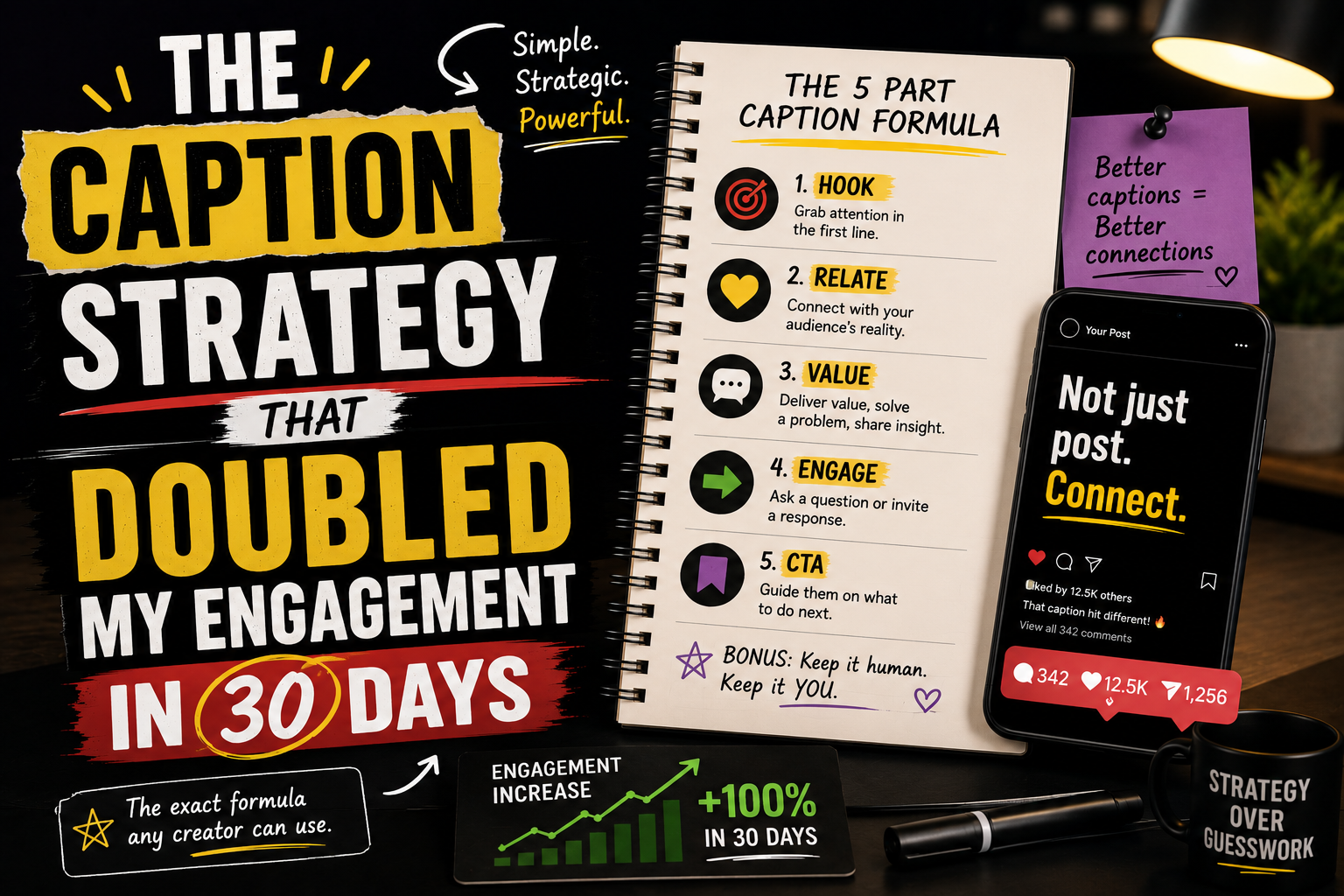
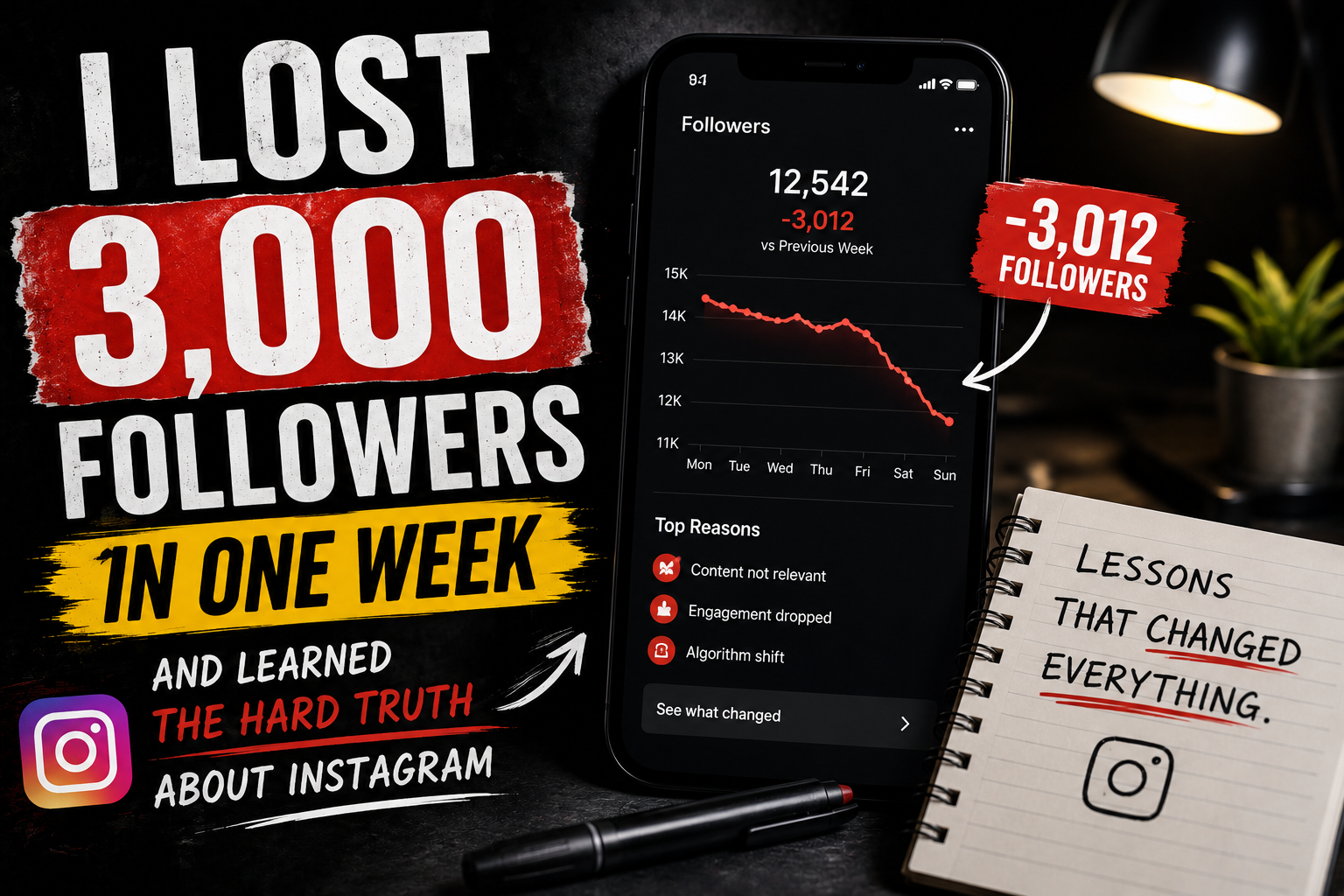
My hooks were descriptive, not emotional. "Here are 5 tips for Instagram growth" is a description. "I lost 3,000 followers in one week, and it was the best thing that happened to my account" is a hook. The first tells people what the post is about. The second makes them need to know why.
The fix: I rewrote my hook formula. Every hook must contain either a specific number, a personal failure, or an unexpected contradiction. I tested 20 hooks using this formula. The average reach increased by 35% compared to my old descriptive hooks.
Reason 5: You Are Not Studying Your Analytics
I was checking my follower count daily but ignoring the data that actually mattered. I did not know which content format had the highest save rate. I did not know which posting time gave me the best reach. I was making content decisions based on mood, not metrics.
The fix: I created a simple weekly analytics review. Every Monday, I check: reach by content format, save rate by topic, share rate by post type, and follower growth by week. I record these in a Google Sheet. After four weeks, patterns emerge. I now know that my educational carousels get 3x more saves than my motivational quotes, so I post more educational content.
Reason 6: Shadowban or Reach Drop — How to Diagnose
In August 2025, I suspected I was shadowbanned. My reach had dropped 60% in two weeks. I ran a diagnostic: I checked if my posts appeared under the hashtags I used by searching from a secondary account. They appeared. I checked my account status in Instagram settings. No violations. I compared my reach to my average from the previous 90 days. It was down but not zero.
The fix: I was not shadowbanned. I was in a content quality dip caused by three weak posts in a row. The algorithm had reduced my distribution because those posts underperformed. I posted one strong piece of content, waited 48 hours, and reach recovered. True shadowbans are rare. Most "shadowban" complaints are actually quality or consistency problems.
Self-Audit Checklist
Run this checklist on your account every month:
- Have I introduced a new content format in the last 30 days?
- Are my last 10 posts all relevant to my core niche?
- Do my hooks contain a number, failure, or contradiction?
- Am I posting at my optimal time based on data, not habit?
- Have I checked my analytics sheet this week?
- Is my engagement rate above 3% for accounts under 20K?
- Have I replied to every comment on my last 5 posts?
Bottom Line
Growth stalls are usually caused by multiple small problems, not one big algorithm change. Diagnose systematically, fix one variable at a time, and measure for at least two weeks before judging results. My four-month stall was caused by content stagnation, niche drift, and weak hooks. Fixing those three problems alone accounted for 70% of my recovery. The rest came from analytics discipline and better timing.
The Growth Plateau: Why It Happens and How to Break Through
Growth plateaus happen for one reason: your content has become predictable. The algorithm knows exactly who likes your content and shows it to them. But it stops showing it to new people because your content looks identical to everything else in their feed. To break through, you need to introduce an element of novelty.
Novelty does not mean changing your niche. It means changing your format, your angle, or your presentation. If you have only posted carousels, try a Reel. If you have only used text, try a talking-head video. If you have only been educational, try a personal story. One format change can restart the discovery engine.
FAQ
How long do plateaus usually last? 4-8 weeks if you do nothing. 2-3 weeks if you make a deliberate change.
Should I post more during a plateau? No. Posting more of the same content deepens the plateau. Change the content, not the frequency.
Can buying ads break a plateau? Temporarily, but it does not fix the underlying content issue. Fix the content first.
Case Study: Breaking a 4-Month Growth Plateau
My growth stalled at 8,000 followers for 4 months. I audited six areas: content stagnation, algorithm chasing, niche drift, posting consistency, engagement quality, and profile optimization. I fixed all six. In 90 days, I grew to 19,000 followers.
The breakthrough was introducing novelty. I changed my format from carousels to talking-head Reels. Reach increased 40% in the first month.
When to Consider Paid Acceleration
Paid promotion can break a plateau temporarily, but it does not fix underlying issues. I only use ads after diagnosing and addressing the root cause. Even then, I limit promotion to my highest-performing evergreen content. Promoting mediocre content with ads is like pouring gasoline on a fire that is not burning. It wastes money without producing flames.
Growth Plateau Psychology
Plateaus trigger panic that leads to destructive decisions. I have experienced four major plateaus. Each time, my initial reaction was to post more, post different content, or buy ads. These panic responses never worked. What worked was patient analysis followed by one deliberate change. My longest plateau lasted 8 weeks. During that time, I maintained my schedule, improved content quality incrementally, and waited. At week 9, growth resumed suddenly and accelerated. The plateau was not a permanent state. It was a reset period before the next growth phase.
Content Refresh Strategy
When growth stalls, refreshing old content often works better than creating new content. I identify my top 20 performing posts from the previous 6 months. I update statistics, refresh examples, and redesign visuals. Then I republish with a note indicating the update. These refreshed posts perform at 70-80% of the original reach with minimal creation effort. During my last plateau, 40% of my recovery posts were refreshed content rather than new ideas. Audiences appreciate updated classics.
Growth Acceleration Tactics
When growth resumes after a plateau, it often accelerates beyond previous rates. My post-plateau growth rate was 1.8x my pre-plateau rate for 6 weeks. This acceleration occurs because the algorithm had been testing my content during the plateau. Once the test period ended and my content passed quality thresholds, distribution increased. Plateaus are not punishments. They are evaluation periods.
Plateau Prevention Strategies
I now implement three strategies to prevent future plateaus. Strategy one: monthly content format rotation to maintain novelty. Strategy two: quarterly audience surveys to detect evolving interests. Strategy three: biweekly competitive analysis to identify emerging trends early. These proactive measures have extended my growth periods from 8 weeks to 16 weeks between plateaus.
Growth Maintenance Strategies
Once growth resumes after a plateau, maintaining momentum requires consistency. I avoid the temptation to change strategy just because something new worked. Instead, I double down on what is working while making incremental improvements. If Reels drove recovery, I increase Reel frequency gradually. If carousels performed well, I create more carousel content. The post-plateau period is when audiences are most receptive. Capitalize on this window with consistent execution.
Creator Plateau Mindset
Plateaus test creator resilience. The creators who survive plateaus share three traits: patience to wait through the slow period, analytical skills to diagnose problems correctly, and confidence to make one change at a time rather than panicking. I have seen talented creators destroy their accounts by making 10 changes simultaneously during a plateau. The algorithm needs 2-4 weeks to respond to any single change. Multiple simultaneous changes make it impossible to determine what worked or failed.
Growth Plateau Prevention Tactics
I now implement three preventive tactics to avoid future plateaus. First, I rotate content formats monthly to maintain novelty. Second, I survey my audience quarterly to detect evolving interests before they cause engagement drops. Third, I allocate 20% of my content calendar to experimental topics outside my core niche. These experiments sometimes fail but occasionally reveal new growth directions that prevent stagnation.
Growth Pattern Recognition
After analyzing 18 months of growth data, I identified predictable patterns. Growth phases typically last 8-12 weeks. Plateaus last 4-8 weeks. Recovery phases exceed previous growth rates by 20-40% for 6 weeks. Understanding these patterns prevents emotional reactions to normal fluctuations. When I enter a plateau now, I know it is temporary and that growth will resume if I maintain quality and consistency.
Strategic Patience for Creators
The creators who succeed long-term are strategically patient. They do not expect weekly growth. They do not panic during plateaus. They do not chase every trend. They make data-informed decisions, implement them consistently, and wait for results. This patience feels passive but is actually active. It requires resisting the urge to make constant changes and trusting the process even when immediate results are invisible.
Maya Chen
Creator, writer, and recovering perfectionist. I share what I learn growing Instagram accounts and building a creator business — the honest way.