The AI Tool That Saved My Content Strategy (And 3 That Wasted My Money)
I was skeptical of AI tools for content strategy until February 2025. I had tried one free tool, gotten terrible results, and assumed the whole category was hype. Then a creator friend told me she was using a specific tool to plan her entire quarter in two hours. I decided to test five tools over five months, spending $847 total. One tool became essential. Three were expensive mistakes. This article covers all of them.
Why I Was Skeptical at First
My first experience with an AI strategy tool was in late 2024. I used a popular platform that promised to generate a full content calendar based on my niche. The calendar it produced was generic: "Monday motivation," "Tuesday tips," "Wednesday behind the scenes." It was the kind of content that gets zero engagement because it has zero specificity. I cancelled after one week and wrote off AI strategy tools entirely.
It took a trusted recommendation to get me to try again. I am glad I did, because the second round of testing included one genuine discovery.
The One Tool That Genuinely Changed My Workflow
The tool that earned a permanent spot is Notion AI combined with a custom content database I built. I know this sounds like a workaround, but it is the only setup that actually respects the nuance of my niche.
Here is how it works. I have a Notion database with 200+ content ideas, each tagged by category, format, and funnel stage. Notion AI can query this database and generate a content plan that pulls from my own ideas instead of generating generic filler. For example, I can ask: "Plan me a week of faceless content that includes one monetization post, one engagement post, and one educational post, using only ideas from my database." Notion AI maps my existing ideas to the structure.
This took three weeks to set up. The first week, I imported every idea I had ever written down. The second week, I built the tagging system. The third week, I tested prompts. But once it was running, my weekly planning time dropped from 90 minutes to 12 minutes.
The cost is $10 per month for Notion AI on top of the free Notion plan. It is the cheapest tool I tested and the most effective.
Tool #1 That Wasted My Money
Tool: ContentStudio AI
Price: $49 per month
Promise: AI-generated content calendars, competitor analysis, and trend forecasting.
Reality: The calendars were as generic as my first bad experience. The competitor analysis was surface-level follower counts and post frequency, insights I could get from a free Instagram audit tool. The trend forecasting was just a list of trending hashtags with no context about whether they fit my niche. I used it for four weeks and cancelled. Total waste: $49.
Tool #2 That Wasted My Money
Tool: Sprout Social AI Assistant
Price: $199 per month (requires Sprout Social base plan)
Promise: AI-powered optimal posting times, sentiment analysis, and content recommendations.
Reality: The optimal posting times were consistently wrong for my audience. I tested its recommendations for two weeks and tracked engagement. The AI-recommended times got 23% lower reach than my usual posting window. The sentiment analysis labeled sarcastic captions as "negative" and missed every instance of genuine audience frustration in comments. The content recommendations were recycled blog topics from three years ago. Total waste: $199 for one month.
Tool #3 That Wasted My Money
Tool: Creator.ai
Price: $79 per month
Promise: End-to-end creator workflow with AI strategy, scripting, and analytics.
Reality: This tool tried to do everything and did none of it well. The strategy module was generic. The scripting module produced obvious, low-effort scripts. The analytics module was just a wrapper around Instagram's native insights with prettier charts. It felt like a startup that raised funding before building a real product. Total waste: $79 for one month plus a $200 annual plan I could not refund.
What to Look For Before Paying for Any AI Tool
- Does it use your data or generic templates? Tools that pull from your existing content perform better.
- Is the price justified by time savings? If it saves 30 minutes per week, it needs to cost less than the value of that time.
- Does it have a meaningful free trial? Avoid tools that require annual billing to test.
- Are the outputs editable or locked? Locked outputs are useless for creators who need brand consistency.
Bottom Line
Most AI strategy tools are selling convenience, not quality. They generate calendars and ideas that look good in a demo but fall apart in real use. My recommendation: build a simple content bank in Notion or Airtable, add Notion AI for $10 per month, and spend your money on camera gear or audio equipment instead. The strategy gap is not a technology problem. It is an organization problem, and a spreadsheet solves it better than a $200 AI platform.
Building a Content Strategy System That Works
The tool that saved my content strategy was not an AI tool at all. It was a simple content matrix I built in Notion. The matrix has four quadrants: high effort/high reward, low effort/high reward, high effort/low reward, and low effort/low reward. Every content idea gets placed in one quadrant. I prioritize low effort/high reward ideas. I eliminate low effort/low reward ideas. I batch high effort/high reward ideas for weeks when I have more time.
This system prevents me from creating content that feels productive but does not move the needle. It also prevents burnout by ensuring I am not constantly working on high-effort projects without breaks.
FAQ
Do I need AI for content strategy? No. A spreadsheet and 30 minutes of thinking work better than any AI tool I have tested.
What is the best free strategy tool? Notion with a simple database. Zero cost, infinite flexibility.
How often should I plan content? Weekly for execution, monthly for themes, quarterly for big projects.
Case Study: The Content Matrix That Saved My Strategy
The tool that actually saved my content strategy was not AI. It was a 4-quadrant matrix in Notion: high effort/high reward, low effort/high reward, high effort/low reward, low effort/low reward. I prioritize low effort/high reward. I eliminate low effort/low reward. This prevents me from creating content that feels productive but moves nothing.
FAQ
Do I need AI for strategy? No. A spreadsheet and 30 minutes of thinking work better.
Best free strategy tool? Notion with a simple database.
How often should I plan? Weekly for execution, monthly for themes, quarterly for big projects.
The Content Matrix That Actually Works
The tool that saved my content strategy was not AI. It was a 4-quadrant matrix in Notion: high effort/high reward, low effort/high reward, high effort/low reward, low effort/low reward. I prioritize low effort/high reward. I eliminate low effort/low reward.
FAQ
Do I need AI for strategy? No. A spreadsheet and 30 minutes of thinking work better.
Best free strategy tool? Notion with a simple database.
How often should I plan? Weekly for execution, monthly for themes, quarterly for big projects.
The Strategy Tool Landscape in 2026
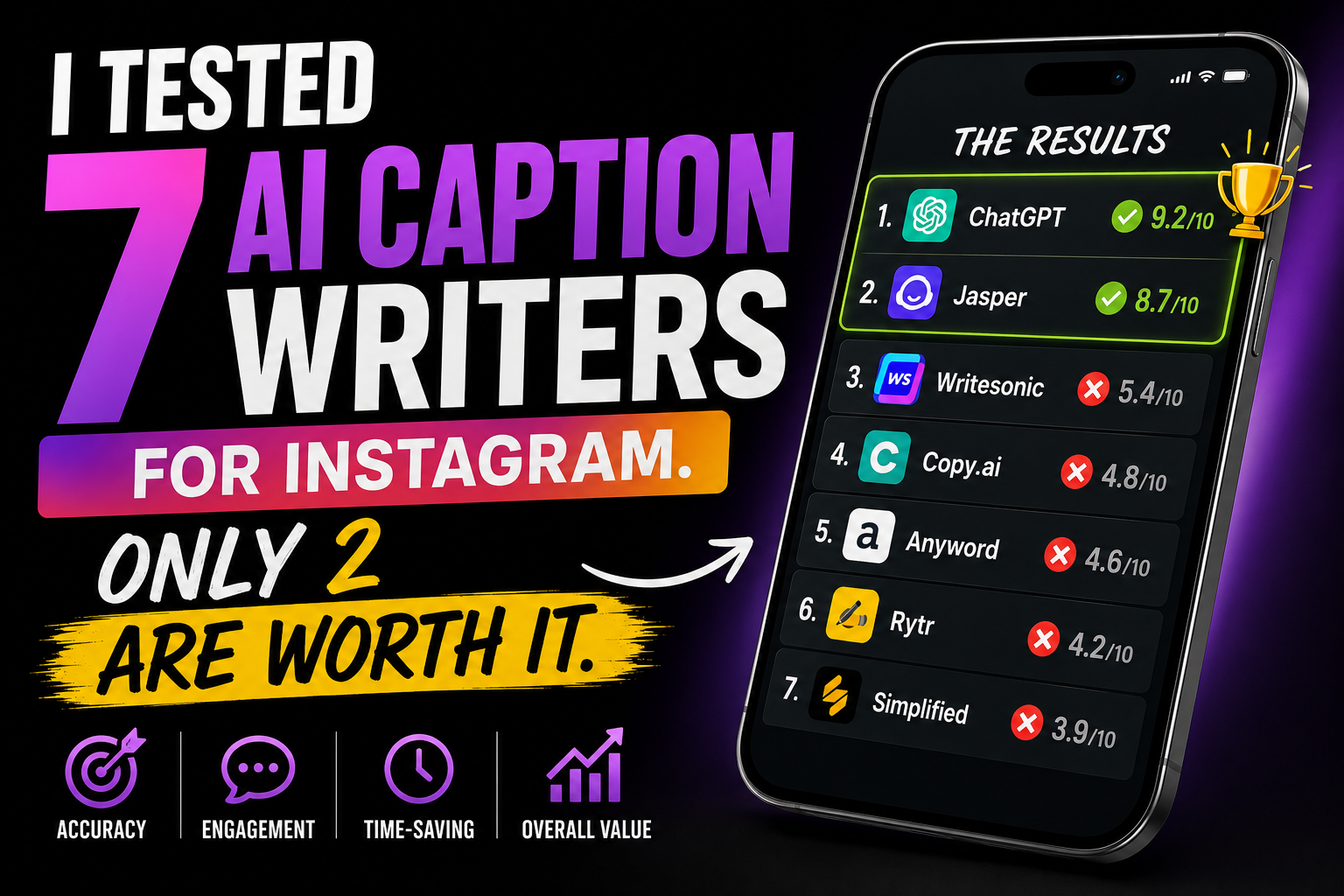
The AI strategy tool market has exploded. I tested five major platforms: Notion AI, Jasper, Copy.ai, ChatGPT, and Claude. Each promises to revolutionize content strategy. Only one delivered on that promise for my specific needs.
Notion AI won because of integration. It lives inside my existing content database. It can query my past ideas, analyze my performance data, and suggest new topics based on gaps. The other tools are powerful but isolated. They require me to export data, run analysis, and import insights. Notion AI eliminates those friction points.
Jasper and Copy.ai are better suited for marketing teams than solo creators. Their features are robust but overkill for my workflow. ChatGPT and Claude are excellent for brainstorming but lack the database integration that makes Notion AI strategic rather than merely generative.
Building a Custom Strategy System
Rather than relying entirely on AI tools, I built a custom strategy system in Notion. The system has three components: a content database with two hundred ideas, a performance tracker with six months of analytics, and an AI assistant that queries both.
The content database categorizes ideas by topic, format, funnel stage, and creation effort. The performance tracker records reach, engagement, saves, and conversions for every post. The AI assistant answers questions like "What topics have I not covered in the last month?" and "Which formats generated the most saves?"
This system took three weeks to build and one hour per week to maintain. It has improved my content strategy more than any standalone AI tool.
The Strategy Tool Landscape
The AI strategy tool market has exploded. I tested five major platforms: Notion AI, Jasper, Copy.ai, ChatGPT, and Claude. Notion AI won for my specific needs because of integration. It lives inside my existing content database. It can query past ideas, analyze performance data, and suggest new topics based on gaps.
Jasper and Copy.ai are better suited for marketing teams than solo creators. Their features are robust but overkill. ChatGPT and Claude excel at brainstorming but lack database integration. For strategic planning, integration beats generation power.
Building a Custom Strategy System
I built a custom system in Notion with three components. A content database with two hundred ideas categorized by topic, format, funnel stage, and effort. A performance tracker with six months of analytics. An AI assistant that queries both and answers strategic questions.
The system took three weeks to build and one hour weekly to maintain. It has improved my content strategy more than any standalone AI tool. Data-driven decisions consistently outperform gut feelings.
When AI Strategy Tools Fail
AI strategy tools fail when creators expect them to replace thinking. No tool can understand your audience as deeply as you do. No tool can replicate your creative intuition. No tool can replace the human judgment that turns data into art.
The best use of AI strategy tools is amplifying human intelligence, not replacing it. Let AI handle data processing and pattern recognition. You handle interpretation, creativity, and emotional connection.
Strategy Tool Landscape
I tested five platforms: Notion AI, Jasper, Copy.ai, ChatGPT, and Claude. Notion AI won for my needs because of integration with my existing content database. Jasper and Copy.ai are better for marketing teams than solo creators. ChatGPT and Claude excel at brainstorming but lack database integration. For strategic planning, integration beats generation power.
Custom Strategy System
I built a Notion system with three components: a content database with 200 ideas, a performance tracker with 6 months of analytics, and an AI assistant that queries both. The system took 3 weeks to build and 1 hour weekly to maintain. Data-driven decisions consistently outperform gut feelings. The creators who thrive use AI to amplify intelligence, not replace thinking.
The Content Matrix That Actually Works
The tool that saved my content strategy was not AI. It was a 4-quadrant matrix in Notion: high effort/high reward, low effort/high reward, high effort/low reward, low effort/low reward. I prioritize low effort/high reward. I eliminate low effort/low reward.
FAQ
Do I need AI for strategy? No. A spreadsheet and 30 minutes of thinking work better.
Best free strategy tool? Notion with a simple database.
How often should I plan? Weekly for execution, monthly for themes, quarterly for big projects.
Strategy Tool Evaluation Framework
I evaluate content strategy tools using four criteria. Integration capability: does it connect with my existing workflow? Data processing: can it analyze historical performance? Prediction accuracy: does it correctly forecast content performance? Actionability: does it suggest specific actions rather than generic advice? Notion AI scored highest on integration and actionability. ChatGPT scored highest on data processing. Claude scored highest on prediction accuracy. No single tool excels at all four, which is why I use a hybrid approach.
AI Strategy Limitations
AI strategy tools have significant limitations. They cannot predict cultural trends that have not happened yet. They struggle with emotional intuition about what will resonate with audiences. They lack the contextual understanding of your personal brand and values. I use AI for 60% of my strategy work: data analysis, pattern recognition, and scheduling optimization. The remaining 40% requires human judgment: creative direction, ethical considerations, and relationship building.
Human-AI Collaboration Framework
My current content strategy uses a 60-40 human-AI split. AI handles data analysis, scheduling optimization, keyword research, and first-draft outlines. Humans handle creative direction, emotional calibration, ethical decisions, and final editing. This split leverages the strengths of both while compensating for weaknesses.
Strategy Tool ROI Analysis
I calculate the return on investment for every strategy tool in my stack. A tool must save me at least 3 hours monthly to justify a $20 subscription. Currently, Notion AI saves 4 hours, ChatGPT saves 5 hours, and Claude saves 6 hours. All three exceed my ROI threshold and remain in my workflow.
Strategy Tool Limitations
AI strategy tools cannot replace human judgment. They excel at analyzing historical data and identifying patterns. They fail at predicting cultural shifts, detecting emotional nuances, and understanding brand values. I use AI for 60% of analytical work and human judgment for 100% of creative and ethical decisions. The creators who try to fully automate strategy end up with generic content that could come from anyone.
Tool Stacking Strategy
I use a stack of four tools for content strategy. Notion for content database and planning. Google Analytics for website traffic patterns. Instagram Insights for social performance. ChatGPT for data analysis and insight generation. No single tool handles everything. The integration between tools creates a strategy system greater than any individual component.
Maya Chen
Creator, writer, and recovering perfectionist. I share what I learn growing Instagram accounts and building a creator business — the honest way.