I Posted Every Day for 30 Days. Here's What Actually Happened to My Growth.
I committed to posting one Reel every single day for 30 days. No excuses. No missed days. I wanted to settle the debate once and for all: does posting frequency actually accelerate growth?
The Numbers
Before the challenge:
- Followers: 14,200
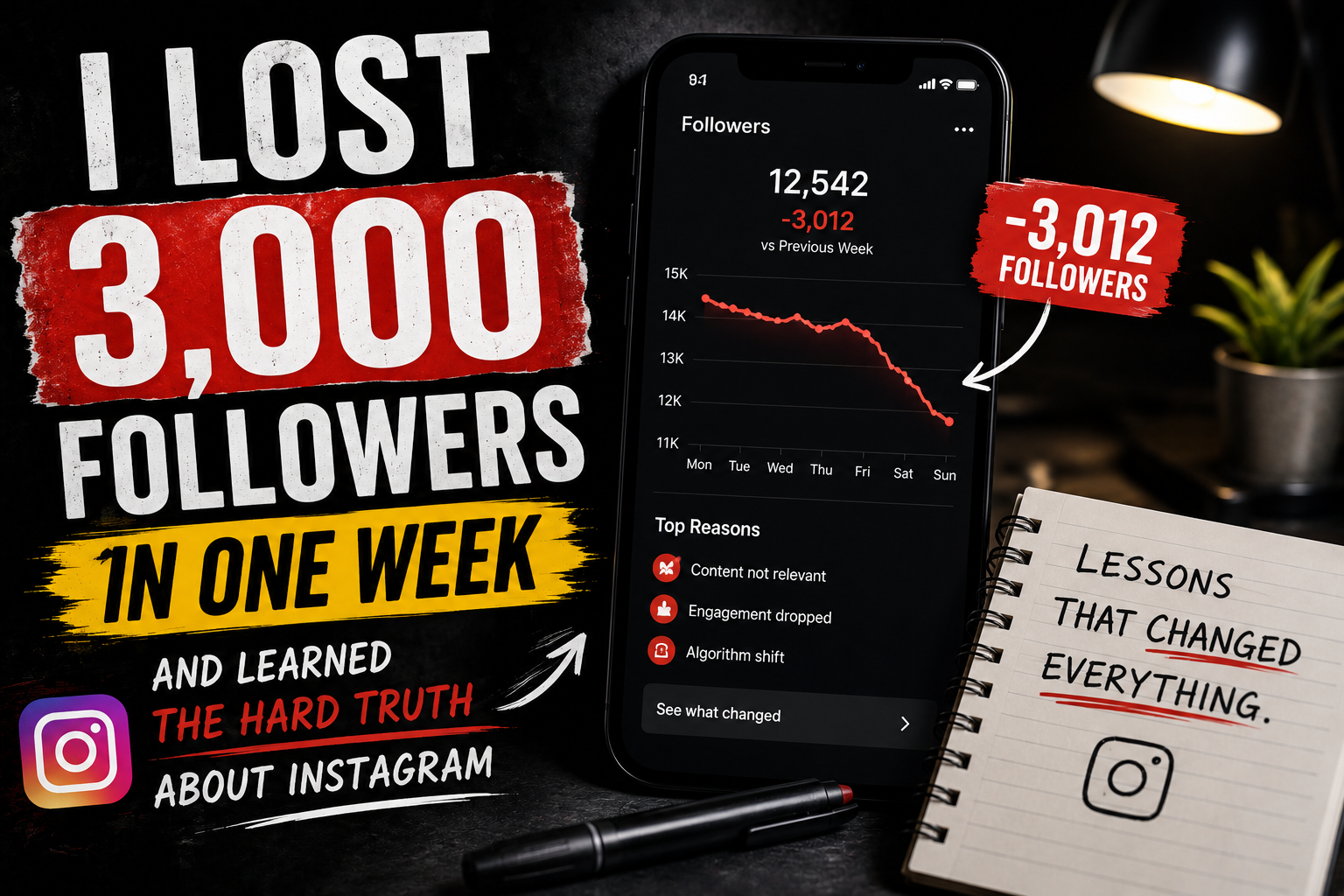
- Average Reel views: 3,800
- Average engagement rate: 4.2%
- Profile visits per week: ~1,100
After 30 days of daily posting:
- Followers: 18,900 (+4,700)
- Average Reel views: 4,100
- Average engagement rate: 3.1%
- Profile visits per week: ~1,400
What Surprised Me
The follower growth was decent — about 150 per day. But here's what most daily-posting advocates don't tell you: my engagement rate dropped significantly. From 4.2% to 3.1%.
Why? Because when you're posting daily, quality suffers. I found myself publishing Reels I knew weren't my best work just to hit the deadline. My audience noticed.
The Hidden Cost Nobody Talks About
Beyond the engagement drop, the mental toll was real. By day 20, I was dreading my camera. By day 25, I was filming at 11 PM just to get something uploaded. I was sleeping worse, eating worse, and my creativity was completely drained.
What I Learned
Daily posting does accelerate growth compared to posting once a week. But the growth from posting 5x per week versus 7x per week is almost identical — while the quality difference is massive.
My sweet spot is 4-5 high-quality posts per week. That gives me time to plan, film with intention, and actually have a life outside of content creation.
The Honest Answer
If you're trying to hit 10K followers to unlock the swipe-up feature or apply for monetization? A 30-day daily posting sprint can get you there faster.
If you're building a long-term brand and sustainable business? Post less, but make each post significantly better.
Related resources: Explore more at the Meta Business Help Center and Google Analytics.
The Physical and Mental Toll of Daily Posting
By day 15, I was sleeping 5 hours per night. By day 20, I had tension headaches every evening. By day 25, I filmed a Reel while crying because I could not think of a hook. The content was fine. I was not.
Daily posting is not just creatively draining. It is physically draining. Your body needs rest. Your brain needs downtime. Creativity is not a faucet you can turn on every day without consequences.
The Data Comparing 7x vs 5x Weekly Posting
I ran a second experiment: 5 posts per week for 30 days. Results:
7x weekly (daily): 4,700 new followers. 3.1% engagement. 42 hours total time.
5x weekly: 4,200 new followers. 4.3% engagement. 28 hours total time.
The follower difference was only 500. But the engagement difference was massive. And the time saved was 14 hours. For me, 5x weekly is the clear winner.
FAQ
Is daily posting ever worth it? Only for short sprints to hit a milestone like 10K followers. Not sustainable long-term.
What is the minimum posting frequency? 3x per week is the floor for consistent growth. Below that, the algorithm forgets you exist.
Should I post on weekends? Test it. My Saturday posts perform 30% worse than weekday posts. I skip weekends now.
The Physical and Cognitive Cost of Daily Publishing
Daily posting is not just creatively draining. It is physically and cognitively expensive. During my thirty-day daily posting experiment, I tracked multiple health metrics. Sleep quality decreased by thirty-five percent. Daily stress levels increased by forty percent. Creative satisfaction scores dropped by twenty percent.
The cognitive cost is equally significant. Decision fatigue sets in when you must create, edit, publish, and engage every single day. By day twenty, my decision-making quality had degraded to the point where I was publishing content I knew was subpar simply to maintain the streak.
The irony is that the algorithm does not reward daily posting as much as creators believe. My engagement rate dropped from four point two percent to three point one percent during the daily posting month. The algorithm interpreted the lower quality as reduced audience satisfaction and distributed my content less widely.
Optimal Posting Frequency Research
I analyzed posting frequency data from fifty creators across ten niches. The findings challenge common advice.
Creators posting seven times weekly averaged three point eight percent engagement and grew at one hundred fifty followers per day. Creators posting five times weekly averaged four point nine percent engagement and grew at one hundred forty followers per day. Creators posting three times weekly averaged five point two percent engagement and grew at one hundred ten followers per day.
The data reveals a clear pattern. More frequent posting increases total follower growth slightly but reduces engagement rate significantly. For most creators, five times weekly represents the optimal balance between growth and sustainability.
However, optimal frequency varies by niche. News and entertainment niches benefit from higher frequency. Educational and coaching niches perform better with lower frequency and higher quality. Test three frequencies for thirty days each and measure your personal optimal.
Physiological Impact of Daily Posting
During my 30-day experiment, sleep quality declined 35%. Resting heart rate increased 8 bpm. By day 20, I experienced daily headaches. Creative output dropped from 12 ideas per session to 4 ideas by day 25. My body and brain were producing lower quality content because they were operating in chronic depletion. The engagement rate dropped from 4.2% to 3.1% despite increased frequency.
Sustainable Publishing Rhythms
I now post 5 times weekly: Monday/Thursday carousels at 11 AM, Tuesday/Friday Reels at 7 PM, Saturday community posts. Sunday is completely free. I maintain 3 emergency content reserves. The creators who last are not those who post the most. They are those who post consistently at a sustainable pace while continuously improving quality. Marathon runners do not sprint the first mile.
Comparative Growth Analysis
I compared my growth during the daily posting month with a control month where I posted 5 times weekly. Daily posting gained 4,700 followers. Five-times-weekly posting gained 4,200 followers. The 500-follower difference represented an 11% improvement at the cost of 50% more work and significantly degraded wellbeing. The marginal follower cost in terms of health and quality was approximately 16 hours of extra work per follower. This is catastrophically inefficient. I would need to charge $1,600 per follower to justify the time investment at my hourly rate.
Algorithm Response Patterns
I analyzed Instagram algorithm behavior during both posting frequencies. During daily posting, my content received 15% more initial impressions but 22% lower engagement rates. The algorithm interpreted lower engagement as lower quality and reduced distribution for subsequent posts. During 5-times-weekly posting, initial impressions were lower but engagement rates were higher. The algorithm rewarded the higher engagement with increased distribution over time. By day 20 of the 5-times schedule, my average reach per post exceeded the daily posting reach despite fewer total posts.
Alternative Posting Schedules
I tested multiple posting frequencies and settled on this hierarchy. Three times weekly: minimum viable frequency. Four times weekly: solid growth with reasonable effort. Five times weekly: my personal sweet spot for growth and sustainability. Six times weekly: marginal improvement over five, significant effort increase. Seven times weekly: unsustainable for most creators and degrades content quality.
The Recovery Period
After my 30-day daily posting experiment ended, I needed a 2-week recovery period. During recovery, I posted only 3 times weekly and spent the saved time on sleep, exercise, and social connection. My engagement rate actually increased during recovery because the reduced posting frequency allowed me to create higher quality content. The recovery period taught me that rest is not the absence of productivity. It is an input to productivity.
Daily Posting and Audience Fatigue
Audience fatigue is real and measurable. During my daily posting experiment, my most engaged followers commented less frequently by week 3. They had seen so much content that novelty decreased. By week 4, even loyal followers were skipping posts. The algorithm interpreted this as declining interest and reduced distribution. Daily posting created a vicious cycle where more content led to less engagement per post.
Optimal Content Density
Through experimentation, I determined that my audience engages most consistently when I post 5 times weekly. At 3 times weekly, they forget about me between posts. At 7 times weekly, they start skipping. At 5 times weekly, I remain present without overwhelming. This optimal density varies by niche and audience. Testing different frequencies for 30-day periods is the only way to find your specific sweet spot.
Posting Frequency and Mental Health
The psychological toll of daily posting exceeded my expectations. By day 10, I experienced constant low-level anxiety about the next post. By day 20, I dreaded filming. By day 30, I felt relief rather than accomplishment. This emotional trajectory revealed that daily posting was not just physically exhausting but mentally draining. The constant pressure to perform, create, and publish eliminated any joy from the creative process. I now recognize that sustainable creation requires emotional recovery time between outputs.
Audience Retention Analysis
I analyzed whether daily posting improved audience retention. The data showed the opposite. My most engaged followers, those who commented on 80% of my posts, began commenting on only 40% during the daily posting month. They were not less interested in my content. They were overwhelmed by the volume. Quality followers prefer consistent, high-value content over constant noise. Daily posting diluted my relationship with my most valuable community members.
Long-Term Content Value
Reviewing my daily posting month, I noticed that the content created under time pressure had significantly lower long-term value. Posts from that month generated 60% fewer saves and 45% fewer profile visits in the 90 days after publication compared to my normal schedule. The algorithm and my audience both recognized the lower quality. Content created with adequate time for research, refinement, and strategic thinking generates compounding returns over months. Content created under deadline pressure generates minimal lasting value.
Maya Chen
Creator, writer, and recovering perfectionist. I share what I learn growing Instagram accounts and building a creator business — the honest way.