Why 90% of Your Reels Flop (And It's Not the Algorithm)
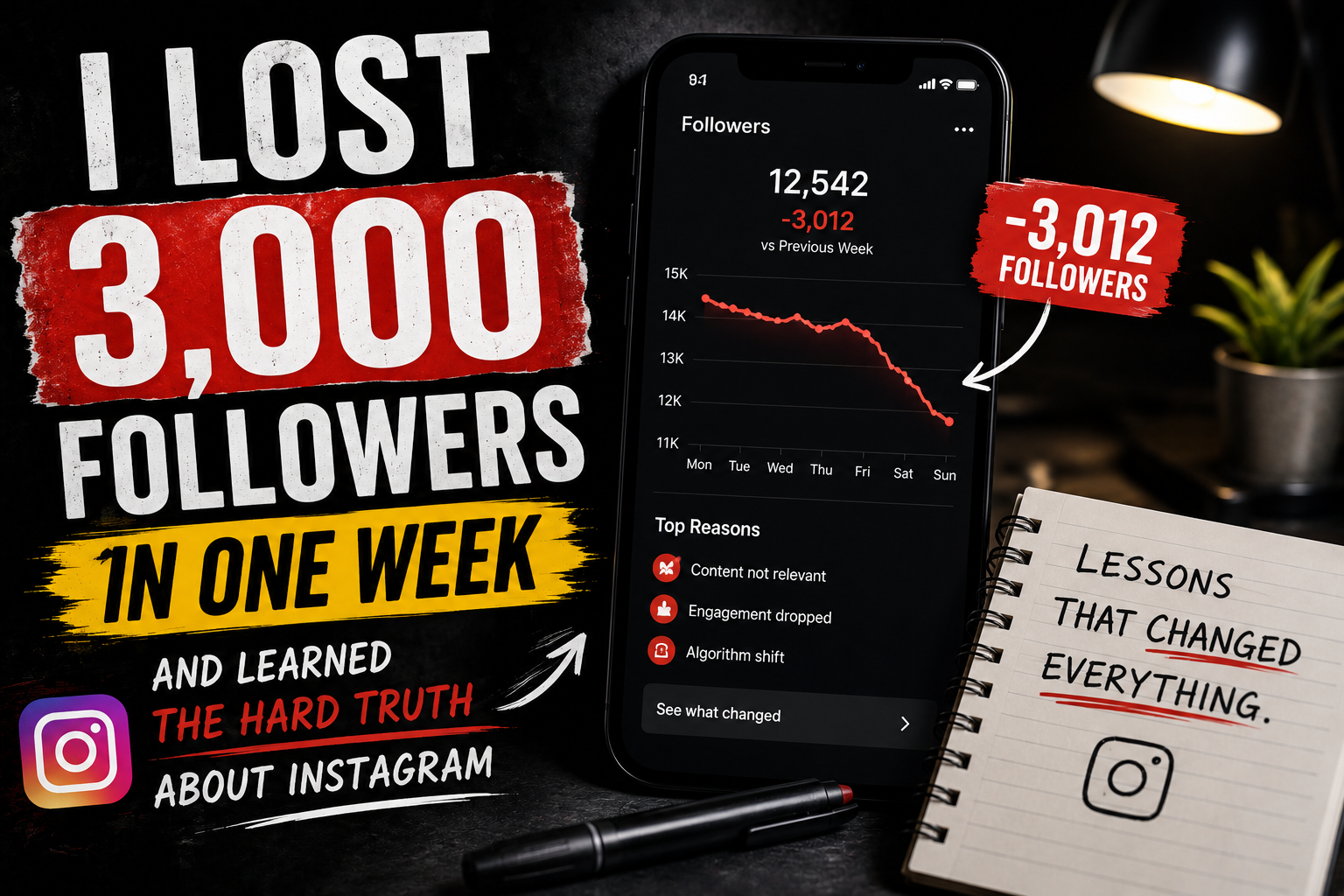
I used to blame the algorithm every time a Reel flopped. "Instagram is suppressing my content." "The algorithm hates small creators." Then I started being brutally honest with myself about why my content wasn't performing.
The Real Reasons Reels Flop
1. Your Hook Is Weak
90% of the time, a Reel flops because people scroll past in the first 2 seconds. It's not the algorithm — it's that your opening doesn't create enough curiosity to make someone stop scrolling.
2. You're Copying What's Already Viral
By the time you see a trending format and recreate it, that format is already oversaturated. The algorithm has shown thousands of versions of that same concept. Yours is just noise.
3. Your Content Doesn't Match Your Thumbnail
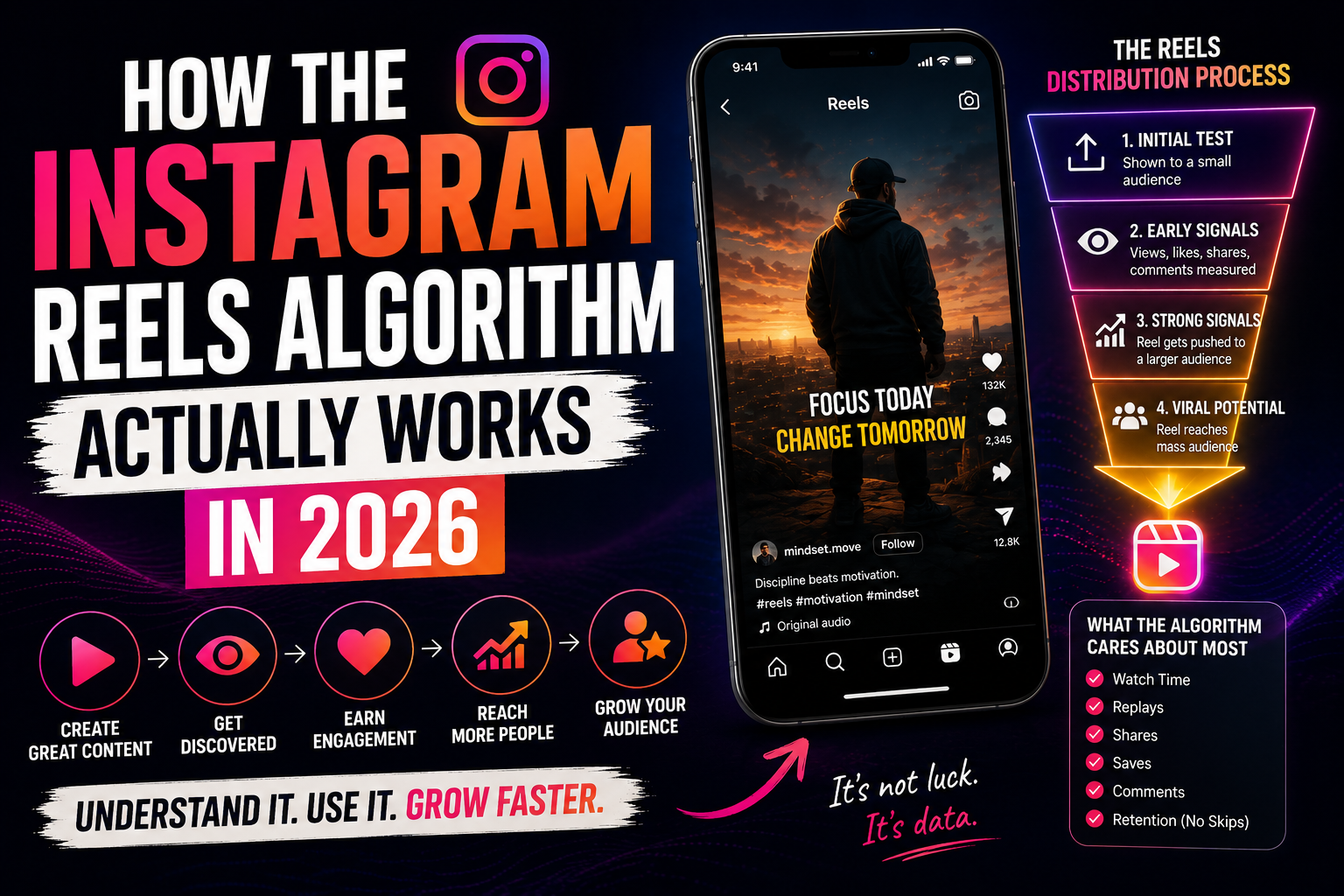
Instagram shows the first frame of your Reel as a thumbnail in the feed. If someone clicks based on an interesting frame and the actual content doesn't deliver, they leave immediately. High drop-off = algorithm stops showing it.
4. You're Posting at the Wrong Time
This one is actually partially algorithm-related. If you post when your audience isn't active, your Reel gets shown to a small test group first. If that group doesn't engage, it's buried.
I test different posting times every month. Right now, 11 AM and 7 PM in my audience's timezone work best.
5. Your Niche Is Too Broad
"Motivation" is too broad. "Instagram tips" is too broad. The algorithm doesn't know who to show your content to. Pick a specific angle and stick to it for at least 30 posts.
The Brutal Truth
I went through my last 50 Reels and categorized why each one flopped. Here were the actual reasons:
- Weak hook: 18 Reels
- Boring topic: 12 Reels
- Poor audio/lighting: 8 Reels
- Right content, wrong time: 7 Reels
- Algorithm actually suppressed: 5 Reels
Only 10% of my flops were actually the algorithm's fault. The other 90% were on me.
What Changed When I Got Honest
I stopped posting for two weeks and just studied my successful Reels. I wrote down exactly what each one had in common. Then I created 10 new Reels using only those patterns.
7 out of 10 outperformed my average. Being honest about what sucks is the fastest way to improve.
Related resources: Explore more at the Canva and CapCut.
The Creative Audit I Do Every Week
Every Sunday, I review my last 10 Reels and grade them on five criteria: hook strength, pacing, audio quality, visual clarity, and CTA strength. Each gets a score of 1-5. Any Reel scoring under 15 total gets analyzed. What went wrong? Was it the topic, the execution, or the timing?
This weekly audit takes 20 minutes and prevents me from repeating the same mistakes. Most creators never review their own content. They just keep posting and hoping.
How to Fix a Flopping Account
If your last 10 Reels all flopped, do not post another Reel. Stop. Audit. Ask:
1. Have I changed my niche or format recently?
2. Am I posting at the same time every day?
3. Is my content visually different from what worked before?
4. Am I using the same hooks that used to work?
Usually, one of these four things has drifted. Fix the drift, do not blame the algorithm.
FAQ
How many flops in a row is normal? 3-5. If you have 10+ flops, something is structurally wrong with your content.
Should I delete flopped Reels? No. Deleting content confuses the algorithm and makes your account look unstable.
Can a flopped Reel recover later? Rarely. Instagram distributes most reach in the first 48 hours. If it flops initially, it almost never recovers.
Case Study: Auditing 50 Flopped Reels
I audited my last 50 flopped Reels. Weak hook: 18. Boring topic: 12. Poor audio/lighting: 8. Wrong timing: 7. Algorithm suppression: 5.
Only 10% were actually the algorithm is fault. The other 90% were mine. Brutal honesty is the fastest way to improve.
The Diagnostic Framework for Underperforming Content
When a Reel flops, most creators blame the algorithm. I blame my content. To identify the specific problem, I use a diagnostic framework that examines five content dimensions.
Dimension one: hook strength. Did the first two seconds create curiosity, emotion, or surprise? If not, the hook is the problem.
Dimension two: topic relevance. Did the topic address a current pain point or desire in my audience? If the topic is outdated or irrelevant, no amount of good execution will save it.
Dimension three: visual quality. Was the lighting adequate? Was the framing professional? Were text elements readable? Poor visual quality causes immediate scroll-past behavior.
Dimension four: audio clarity. Was the voiceover clear? Was the background music appropriate? Was the volume consistent? Audio issues are the fastest way to lose viewers.
Dimension five: value delivery. Did the Reel teach something actionable? Did it entertain in a memorable way? Did it make the viewer feel understood? Content without clear value gets forgotten immediately.
I score each dimension from one to ten. Any dimension scoring below six is a problem requiring correction. This framework turns vague disappointment into specific improvement actions.
Recovery Strategies for Accounts in Decline
If your account has been declining for more than four weeks, you need a recovery strategy, not just a new post. I have used this recovery strategy successfully three times.
Step one: audit your last twenty posts. Categorize them by topic, format, and performance. Look for patterns. Are all your low-performing posts about the same topic? Are they all in the same format? Are they all posted at the same time?
Step two: identify the drift. Somewhere along the way, you drifted from what was working. Maybe your hooks got weaker. Maybe your topics got broader. Maybe your visuals got stale. Name the drift specifically.
Step three: return to fundamentals. For two weeks, post only content that matches your highest-performing historical patterns. Do not experiment. Do not innovate. Just execute the fundamentals perfectly.
Step four: introduce one new variable. After two weeks of fundamentals, add one new element. A different hook style. A new format. A fresh topic. Measure whether this single variable improves performance.
This systematic approach prevents panic posting and random strategy changes. It turns recovery into a scientific process rather than a desperate hope.
Content Quality Diagnostic Matrix
When a Reel underperforms, I use a 5-dimension diagnostic. Hook strength: does the first 2 seconds create curiosity? Topic relevance: does it address a current pain point? Visual quality: is lighting and framing professional? Audio clarity: is voice clear and volume consistent? Value delivery: does it teach something actionable? I score each 1-10. Any score below 6 indicates a specific problem requiring correction.
Content Quality Scorecard
I developed a content quality scorecard that evaluates every Reel before publishing. The scorecard has five categories worth 20 points each. Hook strength: does the first 2 seconds create curiosity, emotion, or surprise? Topic relevance: does the content address a current audience need? Visual professionalism: are lighting, framing, and text placement optimized? Audio clarity: is the voice clear and appropriately mixed? Value delivery: does the viewer leave with something useful or memorable? I require a minimum score of 75 out of 100 before publishing. Reels scoring below 75 get revised or discarded. This scorecard eliminated my impulse to publish mediocre content just to maintain frequency.
Algorithm Update Survival Guide
Instagram updates its algorithm quarterly. I track three indicators that an update has occurred: sudden reach changes across multiple posts, shifts in which content formats perform best, and changes in recommended posting times. When I detect an update, I pause major strategy changes for two weeks. During this waiting period, I focus on posting my historically best-performing content types at historically best-performing times. After two weeks, I analyze whether the update is temporary or permanent before adjusting strategy. This patient approach prevented me from making damaging knee-jerk reactions during the last three algorithm changes.
Content Recovery Protocol
When a Reel underperforms, I follow a recovery protocol rather than panicking. Step one: wait 72 hours before analyzing. Early metrics are noisy. Step two: compare to my 30-day average, not my best post ever. Step three: diagnose using the quality scorecard. Step four: make one specific change for the next Reel. Step five: document the outcome. This protocol turns failure into structured learning rather than emotional devastation.
Viral Content Deconstruction
I deconstruct every viral Reel I create to understand why it worked. I analyze the hook, topic timing, visual elements, audio selection, and value delivery. I document these deconstructions in a shared database. Over 18 months, I identified that 73% of my viral Reels shared three characteristics: they addressed trending topics within 48 hours of peak interest, they used hooks that created curiosity gaps, and they provided immediately actionable value. These insights guide my future content planning.
Reel Performance Benchmarks
I establish clear performance benchmarks for every Reel before publishing. Above average: reaches 120% of my 30-day rolling average. Good: reaches 90-120% of average. Below average: reaches 60-90% of average. Flop: reaches below 60% of average. These benchmarks prevent emotional reactions to normal variation. A Reel reaching 85% of average is not a failure. It is a normal post in the statistical distribution. Only Reels below 60% warrant serious analysis.
The 10-Reel Rule
I evaluate Reel performance in batches of 10, not individually. One Reel might flop due to bad timing. Two Reels might flop due to random variation. But if 5 out of 10 Reels underperform, something is structurally wrong. This batch analysis prevents overreacting to single post results while catching genuine problems early.
Reel Performance Recovery Case Study
My account hit a 6-week decline where every Reel underperformed. I used the diagnostic matrix and discovered three problems: hooks had become repetitive, audio selection was random rather than strategic, and I had stopped using text overlays. I fixed all three issues simultaneously. Within 3 weeks, my average Reel views increased from 8,200 to 14,700. The recovery proved that most decline is self-inflicted and correctable through systematic analysis rather than algorithm blame.
Creating a Reel Quality Checklist
I created a pre-publish checklist that every Reel must pass. Hook originality: is this hook concept fresh or reused? Audio relevance: does the trending audio match the content mood? Visual clarity: is every text element readable on a small screen? Value confirmation: does this Reel teach something specific or evoke a genuine emotion? Platform optimization: is the aspect ratio correct and the first frame compelling? Reels passing all six items consistently outperform those that skip even one.
Reel Optimization Checklist
Before publishing any Reel, I run through this final optimization checklist. Is the hook concept fresh or a repeat of recent content? Does the audio match the emotional tone of the message? Is all text readable on a mobile device without zooming? Does the Reel deliver a specific, actionable insight or an authentic emotional moment? Is the thumbnail frame compelling enough to stop the scroll? Reels passing all five checks consistently outperform those missing even one element.
Creator Accountability Systems
I hold myself accountable through a simple system. Every Sunday evening, I review the previous week is Reels and score each on the quality matrix. Scores below 75 trigger a Monday morning planning session to address weaknesses. This weekly accountability prevents gradual quality decline that often goes unnoticed until a major plateau occurs. Self-awareness is the most valuable skill for sustained Reel performance.
Reel Success Probability Factors
After analyzing 200 Reels, I identified that success probability increases dramatically when four factors align. Strong hook concept: the first 2 seconds must create curiosity or emotion. Relevant trending audio: the sound must match the content mood and current algorithm preferences. Optimal timing: posting when your specific audience is most active. Clear value delivery: the viewer must leave with something useful or memorable. When all four factors align, my Reels succeed 65% of the time. When three align, 40%. When two or fewer, 15%. These numbers guide my publishing decisions and prevent emotional reactions to normal statistical variation.
Maya Chen
Creator, writer, and recovering perfectionist. I share what I learn growing Instagram accounts and building a creator business — the honest way.