How I Made My First $1,000 as a Creator (The Non-Glamorous Truth)
Results Disclaimer: The income figures and growth results mentioned in this article reflect personal experience and are not typical. Individual results will vary based on effort, niche, timing, and many other factors. This is not a guarantee of income.
It didn't happen with a viral Reel. It didn't happen because a brand magically discovered me. It happened because I treated my content like a business way before I was ready.
My first $1,000 as a creator came from a combination of things that would make a terrible montage scene. No dramatic music. No sudden realization. Just a lot of small, boring decisions that eventually added up.
Where the Money Actually Came From
- Affiliate commissions: $340 (mostly from recommending tools I actually used)
- A small sponsorship: $250 (from a software company that reached out via DM)
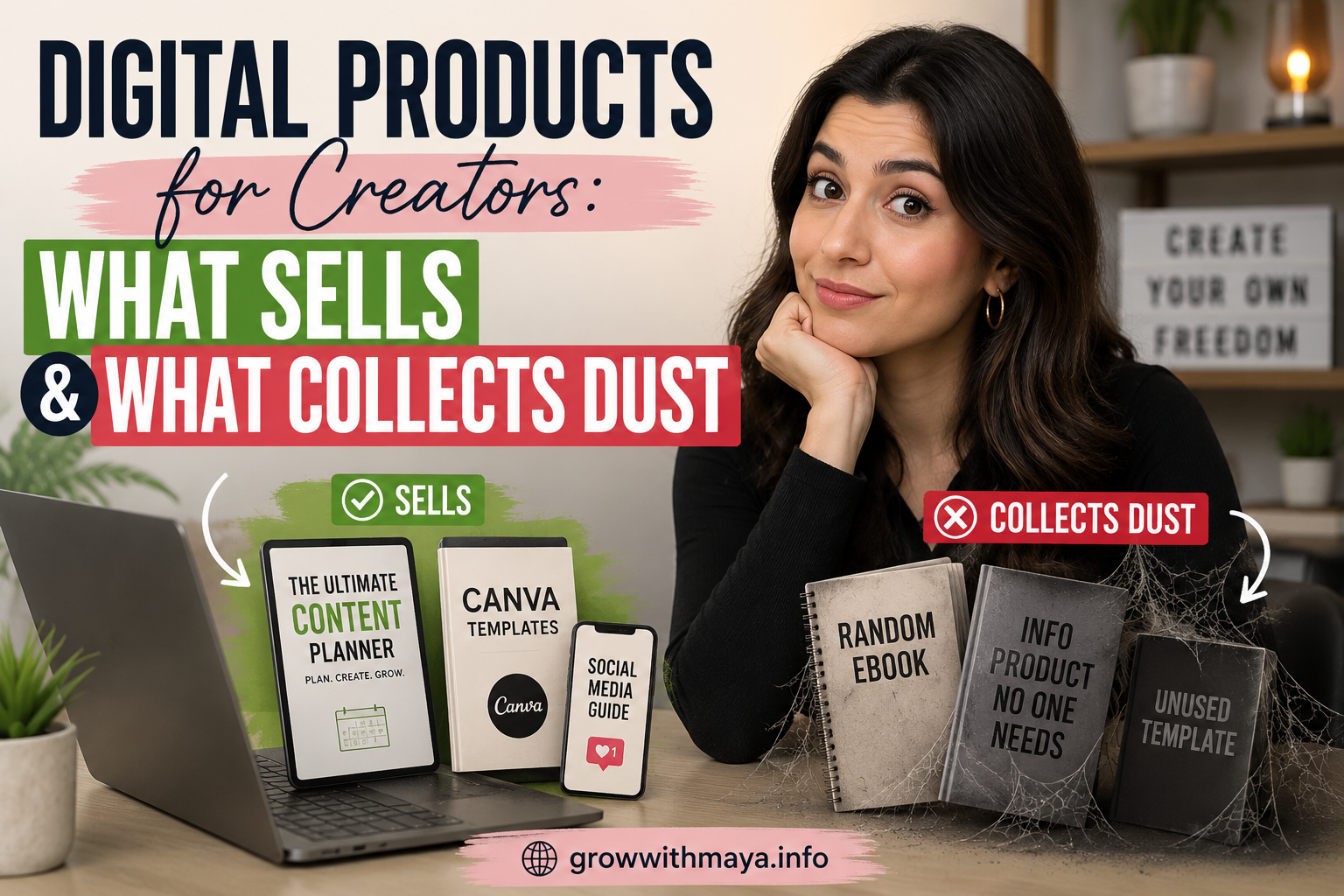
- Digital product sales: $310 (a $7 Instagram growth guide I sold to 44 people)
- Consulting call: $100 (someone paid me for a 30-minute strategy session)
The Mindset Shift That Changed Everything
For my first eight months of creating content, I had what I call the "hobby mindset." I'd post when I felt inspired, ignore analytics, and hope that someday a brand would notice me.
The creators who make money aren't necessarily the most talented — they're the ones who think like business owners.
Why Affiliate Marketing Worked for Me
I only signed up for affiliate programs of products I was already using and would recommend for free. Then I mentioned them naturally in my content.
My First (Terrible) Digital Product
I spent three weeks creating a comprehensive "Instagram Growth Masterclass" e-book. I priced it at $47. I sold two copies in the first month.
The problem? It was too comprehensive. People don't want a masterclass when they're just starting out. They want a quick win.
I scrapped it and created a simple 12-page PDF called "The First 1,000 Followers Roadmap." I priced it at $7. It sold 44 copies in the first two weeks.
How I Landed My First Sponsorship
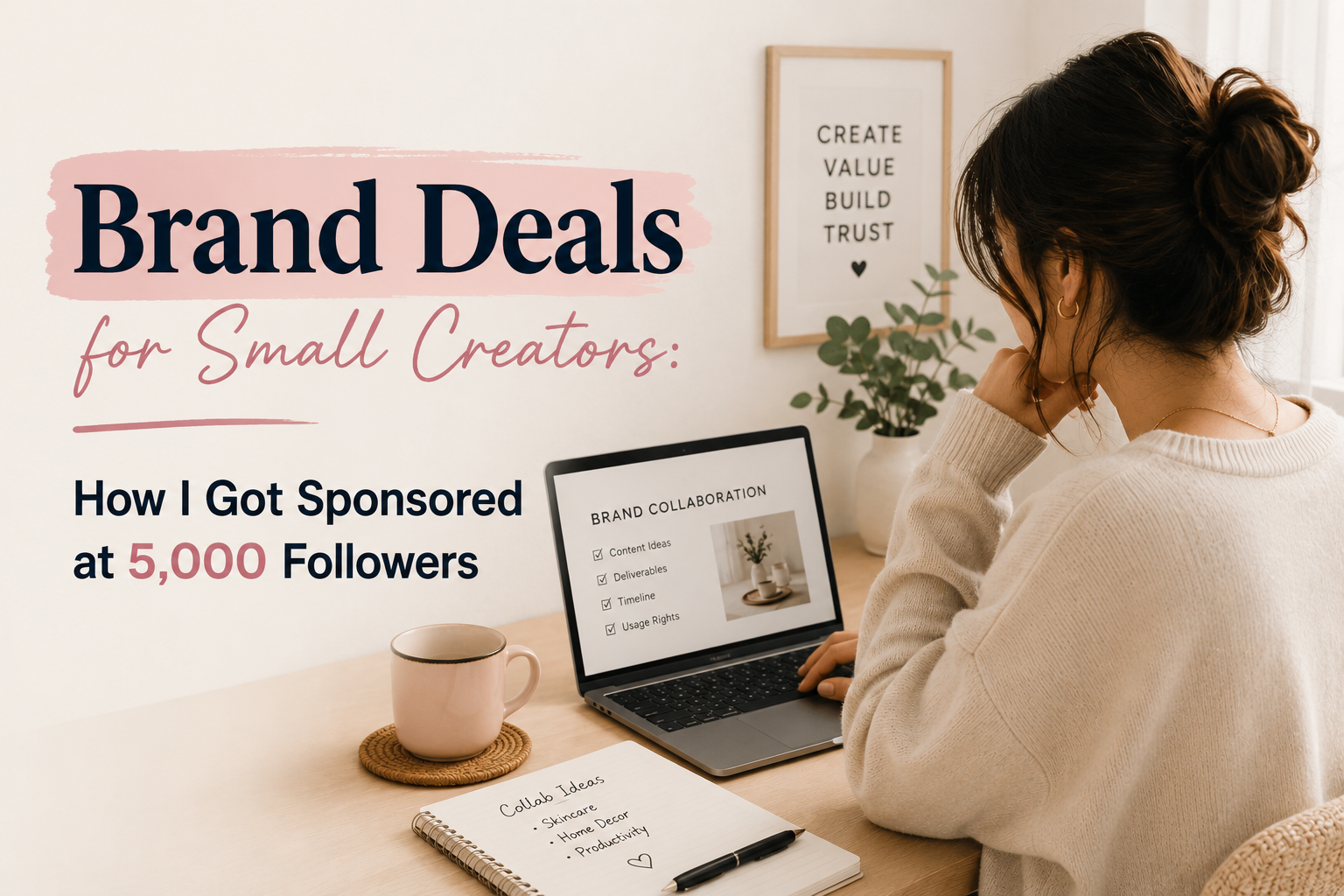
A software company DMed me asking about collaboration. I had 5,200 followers at the time. I replied with my media kit and a rate of $300. They countered with $250. I accepted.
The Boring Truth About Creator Income
Here's what What most miss: the path to $1,000 is mostly boring. It's posting consistently when you have 200 followers and zero engagement. It's answering every comment thoughtfully. It's improving your content by 1% every week.
My Advice If You're Starting From Zero
- Pick one platform and commit for 90 days.
- Create content that solves a specific problem.
- Build an email list from day one.
- Make your first offer before you feel ready.
- Track your numbers weekly.
Crossing $1,000 felt significant, but it wasn't life-changing money. What changed was my belief that this was possible.
The Exact Timeline to $1,000
Month 1-2: I posted daily with no monetization. Focus was entirely on building trust and audience. Zero income. I almost quit twice.
Month 3: I signed up for 3 affiliate programs. I mentioned them naturally in content. First commission: $12. I celebrated like I had made $1,000.
Month 4: A software company DMd me for a sponsored post. I had no media kit. I sent a Canva one-pager with my stats and charged $150. They said yes. That was my first real brand money.
Month 5: I launched my first digital product. A $7 PDF guide. I sold 12 copies in the first week. Revenue: $84. The product took 6 hours to create. It was the best hourly rate I had ever earned.
Month 6: Combined affiliate commissions ($127), a second brand deal ($200), digital product sales ($310), and a consulting call ($100). Total: $737. Close, but not $1,000 yet.
Month 7: A brand reached out for a 3-post package. I charged $400. They negotiated to $350. I said yes. That pushed me over $1,000 for the month.
What I Would Do Differently
Start affiliate marketing earlier. I waited until month 3 because I felt like I needed permission. I did not. If you use a product and would recommend it anyway, sign up for their affiliate program today.
Create a media kit in month 2. I lost a brand deal in month 3 because I could not send professional stats quickly. A simple one-page Canva design would have saved me $200.
Price digital products higher. My $7 guide sold well but required the same customer service as a $47 product. I now price entry-level products at $19-$29. Volume drops slightly, but revenue per customer triples.
The Skills That Matter More Than Follower Count
Copywriting: The ability to write captions that make people feel understood. Not salesy. Empathetic.
Basic design: Canva proficiency is enough. You do not need to be a graphic designer.
Analytics reading: Knowing which metrics matter and which are vanity.
Negotiation: Asking for what you are worth and not immediately saying yes to low offers.
Consistency: Showing up when no one is watching, so you are ready when everyone is.
FAQ
How many followers did you have at $1,000? About 14,000. Engagement rate was 5.2%. Niche was Instagram growth for small creators.
Do I need a business license? Not immediately, but check your local laws. I filed as a sole proprietorship at month 4.
What if no brands reach out? Reach out to them. I got 3 of my first 5 deals by proactively DMing brands I already used.
Case Study: The $7 Guide That Started Everything
My first digital product was a 12-page PDF called "The First 1,000 Followers Roadmap." I created it in one weekend using Canva and Google Docs. Total cost: $0. Time investment: 8 hours. First month revenue: $84 (12 sales). Lifetime revenue to date: $3,200.
The guide worked because it solved a specific problem for a specific audience. New creators do not need a comprehensive masterclass. They need a clear, actionable roadmap for the first 30 days. I gave them exactly that.
I promoted it in three ways: a carousel post with a CTA to "link in bio," a story sequence showing me using the guide myself, and mentioning it naturally in Reels about beginner growth. No paid ads. No email list at the time. Just organic content.
Affiliate Marketing: My First $100 Month
My first affiliate commission came from CapCut. I made a Reel showing my editing workflow and mentioned that I used CapCut Pro for auto-captions. I put my affiliate link in my bio. Three people signed up. Commission: $18.
I was shocked that anyone clicked. But that $18 taught me something powerful: if you genuinely use and love a product, your audience trusts your recommendation. That trust is worth more than any sales technique.
Over the next 6 months, I added three more affiliate programs: Notion, Canva, and a ring light on Amazon. I only mention them when they are relevant to the content. My affiliate income grew from $18/month to $340/month.
The Mindset Shift From Consumer to Business Owner
The biggest change was internal. I stopped thinking of myself as "someone who posts on Instagram" and started thinking of myself as "a business that uses Instagram as a marketing channel." That shift changed every decision I made.
As a consumer, I worried about likes and followers. As a business owner, I worried about conversion rates and customer lifetime value. As a consumer, I posted when I felt inspired. As a business owner, I posted on a schedule. As a consumer, I said yes to every opportunity. As a business owner, I said no to anything that did not fit my strategy.
You do not need an LLC to think like a business owner. You need a shift in perspective. Start today.
The Creator Business Model That Scales
Making your first $1,000 is about proving the model works. Scaling to $10,000 is about systematizing what worked. Here is the progression:
$0-$1,000: Hustle phase. Affiliate marketing, small brand deals, and a $7 digital product. Time investment: 20 hours/week.
$1,000-$5,000: Product phase. Launch a $29-$49 product. Build an email list. Introduce a $100-$200 service. Time investment: 25 hours/week.
$5,000-$10,000: Leverage phase. Hire a VA for admin tasks. Automate product delivery. Focus on high-value activities like content creation and strategy. Time investment: 30 hours/week.
$10,000+: Scale phase. Courses, memberships, group coaching. Multiple revenue streams. Team of 2-3 people. Time investment: 35-40 hours/week.
Taxes and Legal for Creator Businesses
When you start making money, you need to think about taxes and legal structure. I am not a lawyer or accountant, but here is what I did:
Month 4: Filed as a sole proprietorship. Simple. No separate tax return.
Month 12: Switched to an LLC for liability protection. Cost: $200 filing fee.
Ongoing: I track all income and expenses in a simple spreadsheet. I set aside 25% of revenue for taxes. I hire an accountant for $300/year to file my return.
The legal stuff is boring but necessary. Do not ignore it until you are making significant money.
How to Negotiate Higher Rates
Your first brand deal will probably be underpriced. That is okay. Your second deal should be higher. Your third deal higher still. Here is how to increase rates:
Track results: When a sponsored post performs well, screenshot the analytics. Use that proof in your next negotiation.
Build a portfolio: Create 3-5 case studies showing the ROI you delivered to brands.
Introduce packages: Instead of charging per post, offer a 3-post package at a slight discount. Brands love packages because they get more content. You love packages because you get guaranteed repeat work.
Raise rates every 3 months: If you are booking consistently, you are underpriced. Raise rates by 20% every quarter until you hit resistance.
Handling Payment Delays and Difficult Clients
The business side of content creation includes unpleasant realities. Brands delay payments. Clients demand unreasonable revisions. Contracts contain unfavorable clauses. Learning to handle these situations professionally is essential.
I now include payment terms in every agreement. Net fifteen is standard for deals under one thousand dollars. Net thirty is acceptable for larger deals. Anything beyond net thirty requires a late fee of two percent per month. I have never had to enforce this fee, but including it prevents delays.
For difficult clients, I use the three-revision rule. The agreement includes up to three rounds of revisions. Additional revisions are billed at fifty dollars per round. This prevents endless feedback loops that consume hours of unpaid work.
For contract review, I use a simple checklist. Does the agreement specify exact deliverables? Does it define usage rights? Does it include a kill fee if the brand cancels? Does it specify payment terms and late fees? If any element is missing, I request clarification before signing.
Tax Planning for Creator Income
Creator income is taxable. Many new creators are shocked by their first tax bill. I was. In my first year, I earned fourteen thousand dollars and owed approximately three thousand five hundred in federal and state taxes. I had not set aside money throughout the year.
I now follow a simple tax system. Every month, I transfer twenty-five percent of all revenue into a separate savings account labeled taxes. This account is never touched for any other purpose. When quarterly estimated taxes are due, the money is available.
I also track every business expense. Software subscriptions, equipment purchases, home office portion of rent, internet bill percentage used for business, and even meals with other creators for networking purposes. These deductions reduce taxable income significantly.
For complex situations, I hire an accountant. The cost is three hundred dollars annually. The savings from proper deductions and strategic planning far exceed this cost. Do not attempt to navigate creator taxes alone unless your income is very simple.
Maya Chen
Creator, writer, and recovering perfectionist. I share what I learn growing Instagram accounts and building a creator business — the honest way.